
Education for Sustainable Development and Gender
At the Center for Sustainable Development, our Education team sits at the forefront of global learning transformation — where research meets real-world impact. Rooted in the Sustainable Development Goals framework and driven by decades of on-the-ground experience across Africa, Asia, and the Americas, we partner with NGOs, governments, and communities to design and implement evidence-based education solutions that last. Our work spans foundational literacy, sustainability education, social-emotional learning, digital skills, and education data systems — always with equity, gender justice, and environmental sustainability at its core. We don't just study education challenges; we co-create solutions with the communities living them, building the partnerships and local capacity that make change durable. From training teachers in conflict zones to launching youth-led citizen science initiatives, CSD Education turns bold research into meaningful action for lifelong learning across the globe.
SUSTAINABILITY EDUCATION at CSD is supported by a powerhouse network of researchers and mentors drawn from across Columbia University's Climate School, the CSD team, and the renowned Lamont-Doherty Earth Observatory — giving young people direct access to world-class scientific expertise. At the heart of the program is a commitment to Citizen Science: the belief that young people are not just beneficiaries of research, but its co-producers. Our programs include participants conducting real, youth-led investigations into sustainable development challenges, contributing original data and insights through hands-on global fieldwork — from water fluoride testing to in-depth environmental education studies in India. This CITIZEN SCIENCE foundation is matched by an equally strong commitment to action: our learners develop the advocacy skills to bring science-backed solutions directly to decision-makers, while building awareness in their own communities about sustainable living. Through a partnership with SDGs Today, they also master cutting-edge tools like ArcGIS StoryMaps — learning to craft compelling narratives that translate their own scientific findings into stories that move people, inspire communities, and drive change.
- The Eco Ambassador Program is where youth stop being passive learners and become active agents of change. This flagship initiative connects young people directly with researchers, practitioners, and educators who are on the frontlines of sustainability — co-creating knowledge, building community, and advocating for a more just and sustainable world. Through the lens of "Science for Everyday Decisions," Eco Ambassadors don't just study environmental challenges — they engage with them, challenge them, and design solutions to them, building the skills, confidence, and networks to lead lasting change in their communities and beyond. This program has inspired the inception of our Eco Ambassador Solutions Lab. An initiative that started in a small public library meeting room with 20 students has now grown to a program attracting 500+ applicants from 40+ countries worldwide. The details of our summer Lab sessions can be found here: https://sdgstoday.org/eco-ambassadors-program.
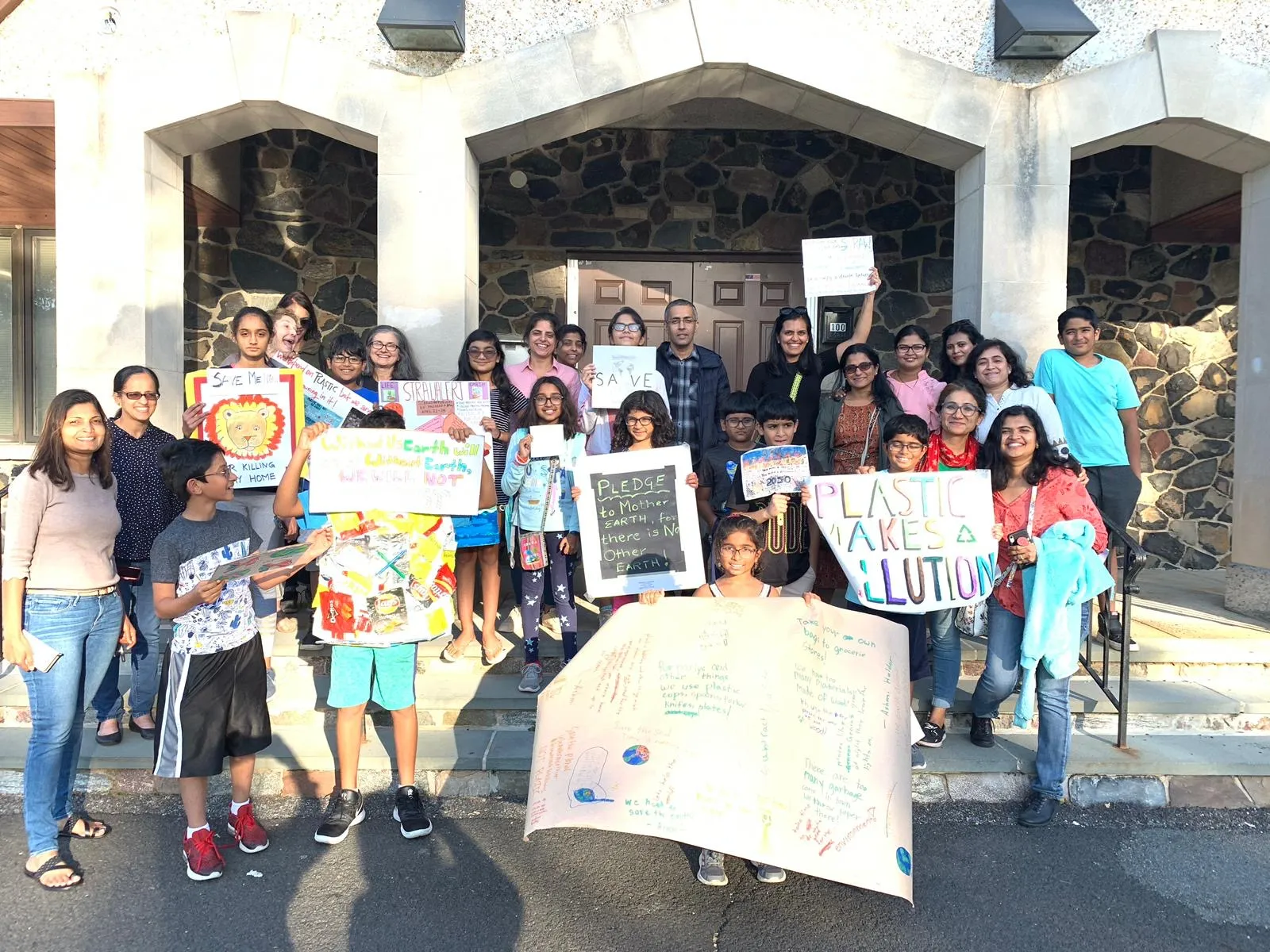
- Education for Sustainable Development in the backyards of the Union Carbide Factory in Bhopal: What does it take to turn informed awareness into transformative action? That was the driving question behind a landmark field study led by CSD's Dr. Radhika Iyengar in Bhopal, India — in the shadow of one of history's most devastating industrial disasters, the Union Carbide Factory site. In November 2018, Dr. Iyengar embarked on an exploratory Citizen Science study examining how communities engage with environmental knowledge and what bridges the critical gap between understanding environmental issues and actively advocating for change. In collaboration with Lamont-Doherty Earth Observatory researchers Dr. Joaquim Goes and Margie Turrin, the project harnessed cutting-edge climate and environmental science to craft culturally resonant, community-centered messages designed to inspire real behavior change. The result: a powerful model for how rigorous research, local context, and community voice can come together to make environmental education not just informative — but genuinely transformative. Explore the research through these videos on plastic and climate change.
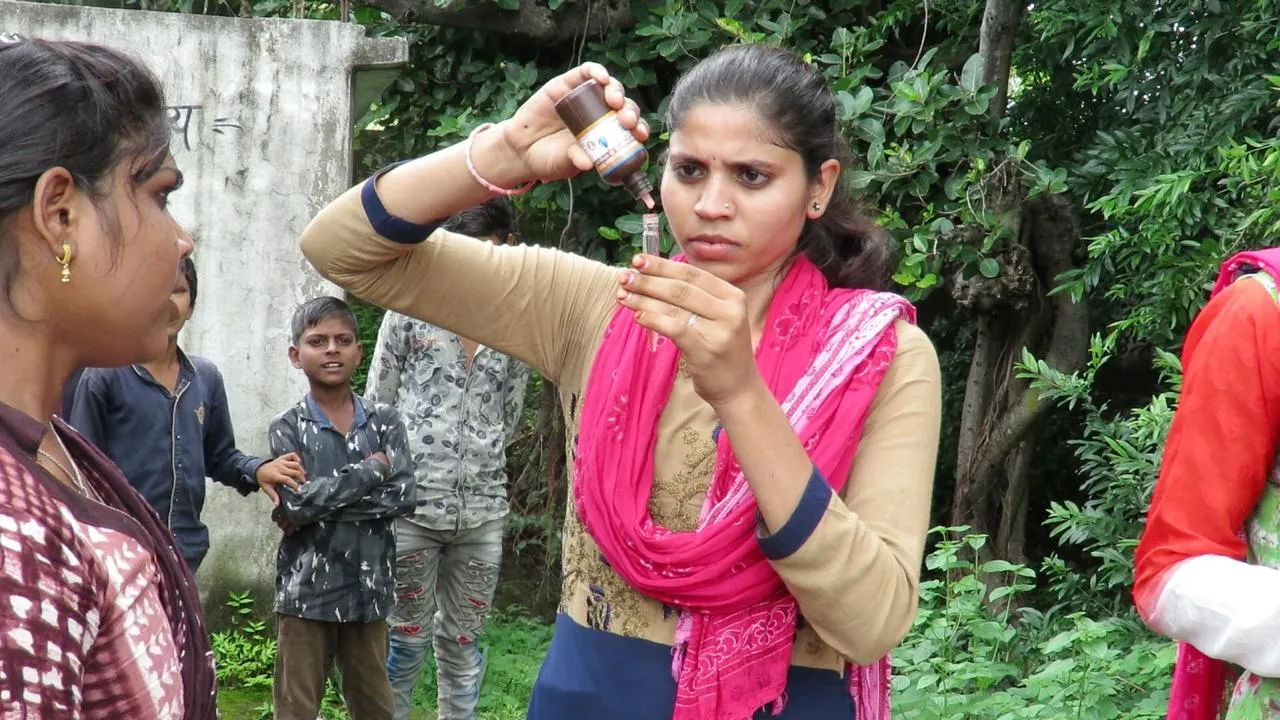
- Education on Fluoride Awareness in tribal districts in Madhya Pradesh State of India: In the tribal heartland of Jhabua, Madhya Pradesh, a silent public health crisis persists: abnormally high levels of fluoride contaminating the government hand-pumps and wells that communities depend on daily. Despite awareness of the risks, village residents continue to drink from these toxic water sources — a stark reminder that knowledge alone is not enough to drive change. This is precisely where education becomes a lifeline. In collaboration with Dr. Lex van Geen of Lamont-Doherty Earth Observatory and local NGO INREM (http://www.fluorideindia.org), CSD pioneered a community-centered approach to fluoride awareness — meeting people where they are through school-based programs and grassroots community education to bridge the gap between knowing and acting. This work exemplifies CSD Education's core belief: that rigorous science, delivered through culturally grounded, community-owned education, has the power to protect lives.
ICT & SEL & VOCATIONAL TRAINING
At CSD Education, we believe that truly transformative education must work on multiple fronts simultaneously — equipping people with the technical skills to earn a living, the emotional foundations to thrive, and the agency to lead change in their own communities. Whether through our groundbreaking ICT Center model — which harnesses the power of renewable energy, digital skills training, and gender-responsive programming to unlock economic opportunity for women — or through our deeply human-centered approach to Social Emotional Learning (SEL), which nurtures the well-being of students, teachers, and entire school communities, our work is unified by a single conviction: that education is most powerful when it addresses the whole person. By weaving together vocational training, SEL, gender empowerment, and a steadfast focus on vulnerable populations, CSD Education designs programs that don't just build skills — they build lives.
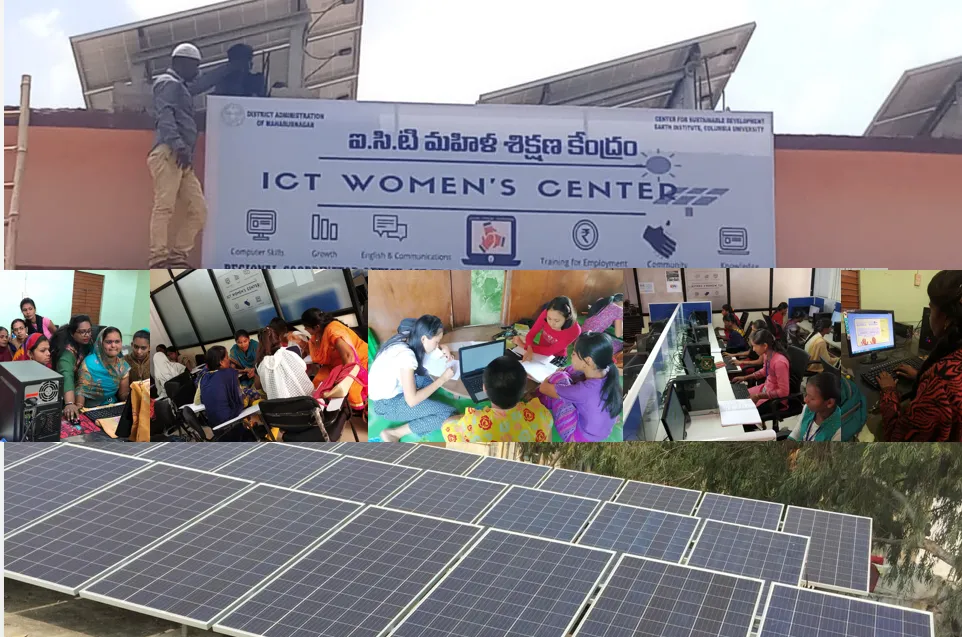
- Women-led ICT Center in Mahbubnagar, Telangana: In a pioneering collaboration between CSD Education and i4SD, the ICT Center model was brought to life as a concrete, replicable solution for women's economic empowerment — one that sits at the bold intersection of renewable energy, digital education, and gender equity. Designed and implemented for Telangana state in India, the Center provided women with targeted, income-generating skills training powered entirely by sustainable solar energy — a deliberate design choice that embedded environmental sustainability into the program's very infrastructure. By weaving together ICT skills, entrepreneurship training, and gender-responsive programming, the ICT Center became a living proof of concept: that meeting the SDGs is not about choosing between economic development, education, and environmental sustainability — it is about designing solutions bold enough to advance all three at once. The project was conducted under the study “Towards a New Indian Model of ICT-Led Growth and Development,” with Professor Jeffrey Sachs and Dr. Nirupam Bajpai as leads.
- ICT-led skilling in informal vocational centers in Myanmar: Across India, Rwanda, and Myanmar, CSD Education has been quietly transforming what vocational training looks like for adolescent girls and women — and the results are anything but quiet. CSD Education designed and implemented a dynamic ICT-integrated curriculum that goes far beyond basic computer literacy, equipping participants with the practical digital skills that today's economy demands: business promotion and marketing, professional communication across social media and official channels, compelling presentations, and confident customer engagement. But what makes this curriculum truly distinctive is its intentional human-first design philosophy. From the very first sessions, the program prioritizes building a safe, familiar, and empowering environment — using group activities, brainstorming sessions, and reflective exercises that invite participants to recognize and celebrate their own strengths and successes. This is vocational training that understands a fundamental truth: before you can build marketable skills, you must first build the confidence, trust, and community that make learning possible. The ICT Center doesn't just train women for the workforce — it builds the foundations from which they can truly soar.
- Making Technical Vocation and Education Training (TVET) Green in Ghana: With a local NGO Youth and Women Empowerment (YOWE), CSD Education joined forces to deliver holistic, market-ready training for women artisans — combining hands-on trade skills with the business acumen needed to turn craft into livelihood. Through companion training in business planning and marketing, women were equipped to create and develop entrepreneurial confidence and strategic thinking to build sustainable, independent businesses. Based on CSD’s ICT Model, the program incorporated digital skills to expand participants' horizons far beyond their local markets, arming apprentices with the tools to research emerging market opportunities, amplify their products to wider audiences, and connect with potential buyers beyond immediate communities and environments.
- Strengthening Education in North East Nigeria States (SENSE) Project: In the face of one of West Africa's most devastating education crises, CSD Education is supporting the rebuiling process. The Strengthening Education in North East Nigeria States (SENSE) project — in a collaboration with the American University of Nigeria and Kent State University — worked on the frontlines of educational recovery in Adamawa and Gombe states, regions where a decade of Boko Haram and Islamic State-West Africa insurgencies have severely disrupted access to schooling for hundreds of thousands of children and their families. By training 100 education managers, strengthening the instructional skills of 5,000 teachers, and delivering targeted support for female teachers across 200 primary schools, the project is rebuilding an education system from the inside out — with equity, quality, and peace-building woven into its very foundation. The ripple effects are profound: improved learning outcomes are expected for 200,000 primary school boys and girls, in communities where access to education has become not just a right, but an act of resilience.
EDUCATION DATA
In an era where data has the power to reshape entire education systems, CSD Education is at the forefront of turning raw information into smarter, more equitable decisions. Our approach goes beyond data collection — we build end-to-end data ecosystems that connect real-time information to meaningful action at every level of a country's education system. From training frontline teachers to advising national ministries, we ensure that the right people have the right data literacy skills to interpret, apply, and act on evidence that truly reflects the needs of their communities. The result is not just better data — it is greater coherence, stronger accountability, and education systems that are built to learn, adapt, and improve.
- Geo-spatial Data for Education Planning for Nigeria: Who gets counted determines who gets served. CSD Education is partnering with Columbia University's Center for International Earth Science Information Network (CIESIN) on GRID3 — the Geo-referenced Infrastructure and Demographic Data for Development initiative — a groundbreaking project that is redefining how data can drive equity in development planning. Funded by the Bill & Melinda Gates Foundation and the UK's Foreign, Commonwealth & Development Office, GRID3 harnesses high-resolution population and infrastructure mapping to ensure that the most vulnerable communities are visible, counted, and prioritized in national development decisions. CSD Education brings its expertise to the intersection of this powerful geospatial technology and education policy — most notably applying GRID3's geo-referenced maps directly to Nigeria's Education Policy framework, translating complex population data into actionable insights that inform where schools and health clinics are built, where teachers are deployed, and where resources are needed most. This is data not as an abstract exercise, but as a tool for justice.
- Connect To Learn: CSD Education brought research expertise and fieldwork support to Ericsson’s flagship global education program. Designed to equip teachers, students, and schools with the tools and skills needed for 21st-century learning, Connect to Learn tackles education's most pressing frontiers: digital connectivity, girls' access to ICT, education in humanitarian contexts, and youth empowerment through technology. CSD Education's contribution centered on scholarship management and qualitative data design, collection, and analysis — ensuring that program impact was rigorously documented and evidence-driven. A standout example of this partnership in action is Myanmar, where Connect to Learn reached 31 rural schools, trained 310 teachers in learner-centered pedagogy through Ericsson's innovative VR training program, directly benefited 34,000 students, and awarded 600 scholarships to girls — breaking new ground through unique public-private collaborations.
- Crafting m-Education data policy for Ghana: In partnership with Millennium Promise, a New York-based non-profit, CSD Education is providing high-level technical assistance to modernize how education data is framed, collected, and used at both local and national levels. At the heart of this collaboration is a landmark white paper that lays out a comprehensive policy framework — covering indicator design, data collection frequency, and multi-level data utilization — that serves as the blueprint for a transformative shift: moving entire education systems away from paper-based record keeping and toward dynamic digital mapping of schools and student performance. The result is an education data infrastructure that doesn't just track progress — it reveals it, in real time, with the precision and clarity that policymakers need to make decisions that truly matter for learners.
FOUNDATIONAL LITERACY
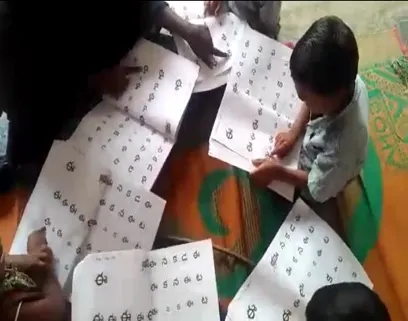
Despite global gains in literacy since 2015, 739 million people worldwide still cannot read or write — and for the most marginalized, progress remains painfully slow. CSD Education is tackling this crisis head-on through rigorous, neuroscience-backed implementation research developed in collaboration with education psychologist Dr. Helen Abadzi. From assessing existing materials and conducting letter and word frequency analyses, to designing remediation methods, developing teaching and learning materials, and training teachers — CSD has led end-to-end foundational literacy implementation research across India, Malawi, Burundi, and Ghana, meeting early readers exactly where they are and building the skills they need to catch up and thrive.
NATIONAL EDUCATION POLICY & PLANNING
CSD Education was engaged by Paraguay's Ministry of Education and Sciences to provide research and technical support for the country's ambitious Strategy for Transforming the Education Sector 2030 (PNTE 2030). The collaboration centered on building an evidence base to inform a national dialogue process — bringing together diverse education stakeholders to identify priorities, surface innovative solutions, and develop a shared roadmap for systemic education reform through 2030. CSD Education contributed data collection and analysis, sector-wide research, and technical guidance designed to ensure that the reform process was grounded in evidence and inclusive of all voices across Paraguay's education landscape. The research and groundwork developed during this collaboration contributed to Paraguay's ongoing education reform conversation.
NEW INITIATIVES & PARTNERSHIPS
THE YOUTH HUB is a global, hands-on workshop series under development by the Education team of Center for Sustainable Development, designed to equip youth with the awareness, skills, and tools to become conscious global citizens and ethical leaders for sustainable development. Grounded in the Conscious Person framework — anchored in empathy, wisdom, peace, justice, and love for the living world — the program integrates inner development with practical competencies: deep listening, systems thinking, digital storytelling, GIS mapping, and Futures Literacy. Through place-based experiential learning, creative expression, and the Ages of Globalization framework developed by Professor Jeffrey D. Sachs, participants can connect their personal histories to shared human narratives and translate that understanding into community-based action. The Youth Hub is being designed as a replicable global model — a growing network of young people who do not merely learn about sustainability, but embody it.
AGES OF GLOBALIZATION is an innovative initiative conceptually based on Professor Jeffrey Sachs' seminal book exploring the story of humanity across the world and over time. Our history is one of interdependence - globalization - as well as change, driven by geography, technology, and institutions. By understanding our shared history, we can also understand how to meet the great challenges of our time. With visits and storytelling at UNESCO's World Heritage Sites, participants are introduced to a new and thrilling curriculum that merges world history, science, geography, technology, interactive maps, hands-on learning activities and monthly live dialogues with world leaders with Professor Jeffrey D. Sachs and distinguished guests from across the globe. CSD Education team leads the curriculum design and partnerships on the project.
MISSION 4.7. With Hon. Audrey Azoulay and Hon. Ban Ki-moon and Professor Jeffrey Sachs as patrons, CSD Education leads the Mission 4.7 Secretariat, driving a bold, collective movement to transform education from the inside out. Through our Community of Practice — developed in partnership with the Sustainable Development Solutions Network (SDSN) USA — we unite educators, policymakers, and changemakers across the United States around a shared commitment to SDG 4.7. Our "We Champion" speaker series amplifies the voices of innovators and practitioners pushing the boundaries of transformative education, sparking dialogue and building momentum around the ideas that matter most. And through dynamic, hands-on training and workshops, we equip teachers and education leaders with the tools, frameworks, and global networks they need to weave sustainability, equity, and justice into every classroom — turning the SDGs from a global agenda into lived, local practice.